Journey
Reflections on Racism and Transformation
Read about the history of the Healing
Racism Committee.

by Sister Jane Snyder, IHM

I believe it was sometime in 1998 when the school principals of the Wilmington, Delaware diocese gathered for one of our regular meetings. An African American speaker—possibly a priest—was invited to speak about racism in schools and across the country. I was irate. How could he suggest that I, or any of us, were racists? Having come to St. Matthew’s after thirteen years in North Carolina, I believed I treated all students equally. To me, color was irrelevant.
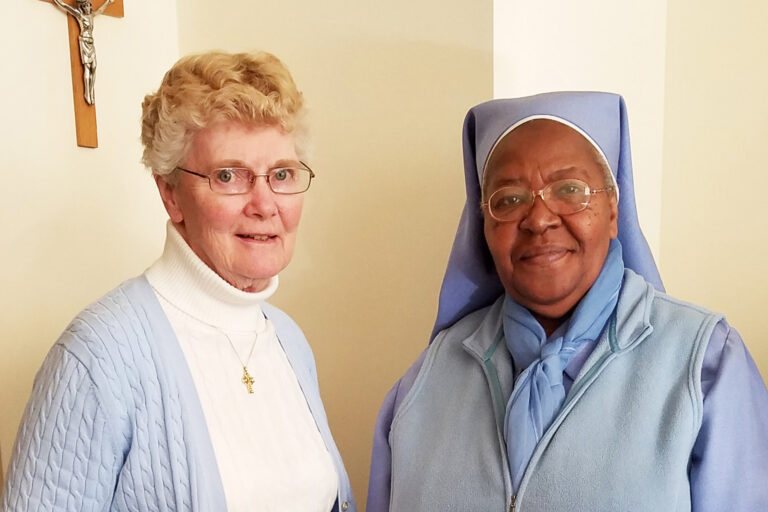
Later, I was serving on the Tri-IHM Leadership Team, which was meeting in Monroe, Michigan. The Oblate Sisters of Providence had begun joining the Tri-IHM group. As part of our prayer, we were invited to share a life experience that had profoundly changed us. I sat beside one of the OSP sisters who quietly shared her story of being rejected from the congregation she had admired throughout her school years. The reason—she was Black, and they did not accept Black women. By the time she finished, I was in tears. Though she had been with the Oblate Sisters for nearly fifty years, the pain of that rejection was still fresh. That moment led me to deep reflection. For the first time, I truly saw her: a holy, sincere woman whose love of God and commitment to mission mirrored my own.
That weekend, doors opened in my heart and mind. I realized that I had never been rejected because of my skin color. My sincerity and commitment to mission had never been questioned because of my race. No one had ever told me, “you can’t,” because of the color of my skin.
At the next Tri-IHM/OSP meeting in the fall of 1999, someone asked, “Will we ever be able to put racism on the table for conversation?” And the floodgates opened.
The conference formed a committee with sisters from each of the four congregations to develop a program that would place the issue of racism front and center. I was appointed to this Racism Committee. Our first meeting was held at Mount Providence, the motherhouse of the Oblate Sisters.
We talked for hours, overflowing with ideas and possibilities and clearing away misconceptions we had about each other’s congregation. It was difficult to find a clear direction, but one thing was certain: we needed to build relationships among ourselves where we could be both students and teachers. I remember Sister Alice Chineworth, OSP, gently suggesting that we spend time in silence to hear what the Holy Spirit might be saying. I have cherished that moment and carried Alice’s wisdom with me ever since.
In the summer of 2000, the Racism Committee held its first retreat and workshop. What a week of grace! We experienced powerful presentations, meaningful prayer, and deep conversations. By the end of the week, forty sisters—ten from each congregation—had formed genuine friendships, shared openly and honestly, and bridged the divide that isolation had created.
This experience led to new initiatives and a renewed commitment to confronting racism within our communities, our congregations and ourselves.
The committee was renamed The Healing Racism Committee which reflected the purpose of our work more accurately. Not sure it was possible to “heal” racism, we agreed that our own personal growth and reflection was the only way to confront and heal racism. Examining our own responses to our attitudes helped us grow in profound ways.

Each summer for several years we brought sisters from all four congregations – probably 200 or so, in all – together to pray, discuss, and share our attitudes and responses to racism. This has produced a remarkable growth in ourselves personally and in our concern and love for one another.
I believe this work has been abundantly blessed by Mother Theresa Maxis, our foundress and a bi-racial woman, and Venerable Mary Lange, foundress of the Oblate Sisters of Providence and a woman of color as well. Their faithfulness to God’s will for them brought them through adversities and struggles to establish four congregations of religious women. They remain a guiding beacon to our continuing efforts to root out racism and to be a sign of hope and love in our ministry of unconditional love for all.
Sister Jane served on the Healing Racism Committee from 2000-2018. She is currently involved with policy writing and governance concerns for the Sisters of IHM. She is a member of the Scranton IHM Congregation.