Journey
Solstice: The Dance of Light and Dark
From the start of creation, light and dark have cooperated to frame day and night. Light and darkness are at the heart of life.

Light is praised at the moment of dawn, and night prayer allows for one’s day to be reviewed as darkness brings rest and peace.
Many years ago, when I lived on Long Island, a friend invited me to an incredible celebration at the Church of Saint John the Divine in Manhattan. The church was packed, and I could feel the excitement in the air. Suddenly, a huge gong gave off a majestic sound. To my surprise, a fully grown tree was pulled into the church to the sound of music written by the composer Paul Winter. I was at a powerful celebration of the spring solstice!
Solstices are meaningful, cosmic, terrestrial events. The writer Richard Heinberg calls them “the original Earth days.” They are astronomical facts celebrated for thousands of years. The word solstice comes from the Latin meaning “the sun stood still.” The solstices divide the year into two halves by the waxing and waning of the sun. The solstices form a creative relationship between light and dark, day and night, heat and cold. The sun tilts a certain way to create this dance. The other moments that are related to the experience of light and darkness, of day and night, are the equinoxes. They celebrate the fact that there is equal light and darkness, a time of balance, on a particular day. I must admit to being fascinated with this cosmic reality when I was growing up. I think I expected an alarm to go off when the balance was just right!
Our ancient ancestors were keen observers of nature; they experienced the power and influence of the cosmos. They knew the importance of the earthly cycles and the interplay of light and dark. We, so-called scientific people, may know about the solstices, but our modern responses to them are rather sterile. I once had a student ask me what the “big deal” was at Stonehenge on the day of the summer solstice. Needless to say, I took time in class to explain why thousands of people visit Stonehenge and New Grange every year to watch the sun rise and set perfectly in between two huge stone pillars. Those who constructed the many stone circles in Ireland, Scotland, and England understood that all that surrounded them in nature and in the cosmos was sacred. Another interesting fact is that King Solomon’s temple in Jerusalem was oriented to the equinox sunrise. This shows that the temple’s purpose was connected to the coming of the divine.
Christine Valters Painter, whose spiritual writing often focuses on Celtic Christianity, writes in her book, The Soul’s Slow Ripening, that “the unfolding of the seasons and the rhythms of the earth was an overarching template for the Celtic imagination and spirit.” They farmed the land, lived by the sea, knew the way the tides came in, and respected the sacred symbol of the circle represented by the sun and the moon. Sun circle symbols are found in pre-Christian rock art. Each of the great Celtic harvest festivals happens at the midway points between the solstices and equinoxes. There is Samhain (pronounced sow-en) that coincides with All Saints and All Souls Days. Imbolc is the midway point between the winter solstice and the spring equinox. St. Brigid’s feast and Candlemas come at this time as well. Beltane, a time of flourishing, takes place at the midpoint between the spring equinox and the summer solstice. It is experienced at the height of spring. The light has shifted! The flowers are blooming.
As I ponder the theme of our Chapter 2026, The Light that Darkness Makes, I understand on a new level that light and darkness are bookends of time. From the start of creation, light and dark have cooperated to frame day and night. Light and darkness are at the heart of life. We lived in a womb of darkness that kept us safe, and then we emerged into the light of day. On the journey, we learn that both light and darkness bring us wisdom and spiritual growth. The monastic way respects the sacred rhythms of the day as seen in the Liturgy of the Hours. Communal and personal prayer centers around the rising and setting of the sun. Light is praised at the moment of dawn, and night prayer allows for one’s day to be reviewed as darkness brings rest and peace. As we tap into prayer throughout our day, we understand that all time is holy. We once again honor the life cycles of the seasons, the earth, the planets, and the stars.
This year, the spring equinox occurred at 10:46 am on March 20in the Northern Hemisphere. This threshold time celebrates the day and night of equal length, marking the start of spring. There are many ways to honor this longed-for day! One can plant new seeds, light bonfires or candles, go on nature walks, and pay attention to the birds and animals along the way. As the late Edward Hays writes in his well-known book Prayers for a Planetary Pilgrim: “Sacred Parent, creator of the sun which makes the seasons, I rejoice in the gift of ever-growing light as the earth daily leans closer to the daystar. With joyfulness I greet this new season of spring that rises from the grey death of winter. I sing with joy that your son, the sun has signaled once again the beginning of a new season of life.”
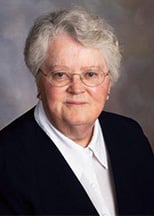
Sister Nancy Hawkins teaches in the religious studies department of Marywood University. She embraces her Celtic roots every day!
References:
Edward Hays: Prayers for a Planetary Pilgrim, page 20.
Richard Heinberg: Celebrate the Solstice.
Christine Valters Painter: The Soul’s Slow Ripening